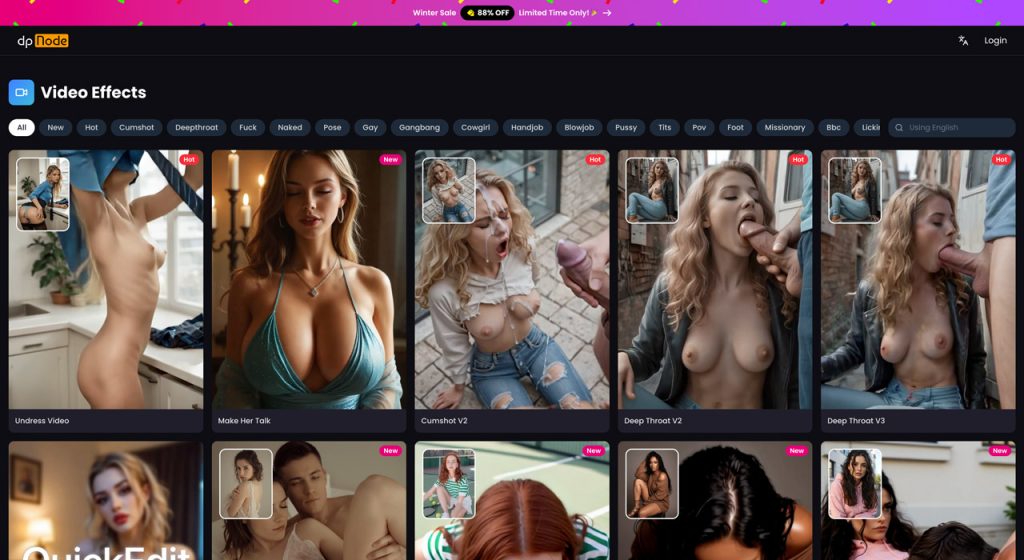
DPNode AI Review – A Template-Heavy AI Fantasy Platform for Image Effects, Video Generation, and Fast Visual Customization
Some AI adult platforms feel like they were built around one temporary gimmick and never really expanded beyond it. You try one effect, generate one result, and after a few minutes the whole thing already starts to feel repetitive. DPNode AI goes in a broader direction. Instead of relying on a single feature, it presents itself as a larger fantasy-focused AI platform where image effects, face editing, undress-style transformations, talking-image tools, and template-based video generation all work together inside one system.
That wider setup is a big part of what makes the platform stand out. DPNode does not feel like a one-click novelty page meant only for quick curiosity. It feels more like a feature-packed AI playground designed for users who want to move between different formats and keep experimenting. One session might start with a simple image effect, while the next might move into animation, editing, or a more specialized template flow.
From a promotional point of view, that gives DPNode strong appeal. The concept is easy to understand, the main actions are clear, and the site immediately communicates that it offers more than a basic generator. Users are not limited to one narrow experience. They can create, modify, animate, and test different fantasy styles inside a single platform, which naturally makes the product feel more replayable than simpler alternatives.
What Is DPNode AI?
DPNode AI is an AI-powered fantasy creation platform built around custom image and video effects. At its core, it focuses on visual transformation, but it expands that idea into multiple directions with image tools, animation tools, enhancement-style features, and a large library of ready-to-use templates. Instead of expecting users to build everything manually, the platform pushes a faster and more guided workflow.
That matters because a lot of users in this space are not looking for a complicated creative suite. They want something fast, direct, and easy to test. DPNode seems built around that mindset. The platform makes it easy to understand where to start, and it lowers the barrier to entry by offering ready-made pathways rather than forcing users to figure everything out from scratch.
The result is a service that feels more accessible than many tools that look powerful but become confusing once you actually try to use them. DPNode keeps the experience focused on immediate output, which is exactly what makes AI fantasy platforms easier to revisit.
Why DPNode AI Stands Out
The first major strength is range. DPNode is not only about one image effect. It stretches across image transformation, face and head editing, talking-image style features, and a very large set of video templates that give the platform much more depth than a smaller one-feature site. That immediately makes the experience feel bigger.
The second strength is speed of understanding. Even at first glance, visitors can tell what the platform wants them to do. Pick a template, use the effect, and generate the result. That kind of clarity matters because many AI tools lose users before the first generation simply by making the workflow feel too technical. DPNode benefits from feeling more straightforward.
There is also a strong variety angle built into the product. When a site offers multiple image effects and a long list of video options, it creates more reasons for users to come back. Instead of repeating the same action every time, they can try new formats, new motion ideas, and different kinds of fantasy presentation without leaving the ecosystem.
Image Effects Make the Platform Easy to Enter
The image side is one of the easiest entry points, and that makes sense. Image-based tools are still the most natural place for many users to begin because they feel quick and intuitive. DPNode supports that kind of fast-start behavior with several image-focused effects that make the product feel accessible even before users move into more advanced creation.
That is useful because first impressions matter a lot in this category. If a platform feels heavy or confusing too early, people leave. DPNode avoids some of that friction by presenting multiple image effects in a way that feels immediate and easy to test. The user is not forced into a complicated setup just to see what the system can do.
It also helps that the image side feeds naturally into the broader platform identity. It does not feel isolated. Instead, it acts as the front door to a larger creative loop that includes editing, animation, and more specialized video generation.
Template-Based Video Gives It More Replay Value
One of the biggest reasons DPNode feels more ambitious than a basic image generator is its heavy focus on video templates. This matters because motion gives AI fantasy platforms a stronger sense of payoff. A still result can be interesting, but once animation enters the picture, the overall experience feels more dynamic and more current.
The template-driven structure is especially useful because it makes video generation feel easier to approach. Instead of demanding advanced prompt skills or complicated scene building, DPNode pushes users toward predefined directions that simplify the process. That helps the platform feel practical rather than experimental.
It also creates stronger replay value. A platform with a deep template library naturally gives users more reasons to return. New combinations, new motion styles, and different visual pathways make the experience feel less repetitive and more expandable over time.
Editing and Transformation Tools Add More Depth
Another advantage is that DPNode does not stop at initial generation. Features like image editing, face swap, and head swap help give the platform a broader transformation identity instead of making it feel like a single-purpose effect site. That extra layer matters because the strongest AI products usually let users do more than just click once and accept the first output.
When editing is part of the experience, the user feels more involved. They are not simply consuming a result. They are shaping it. That adds value because customization is one of the biggest reasons AI fantasy platforms are attractive in the first place. People want participation, not only passive output.
This also helps DPNode feel more complete from a product perspective. The more connected the tools feel, the more likely the platform is to be remembered as a real creative environment rather than a disposable curiosity.
Privacy Positioning Makes the Product Easier to Recommend
Privacy is another part of the platform’s appeal. In this category, users care a lot about whether the process feels controlled and discreet. DPNode leans into that with strong messaging around auto-deletion, private handling, and minimal storage. That kind of presentation helps the platform feel more polished and more trustworthy.
That matters because adult-oriented AI tools can lose credibility very quickly if they appear careless with uploads or generated results. A platform that frames itself around temporary processing and user-side control naturally feels more premium than one that seems vague about what happens to content after generation.
For promotional writing, that is a major strength. Privacy is not a side detail here. It is part of the product identity, and it makes the platform easier to position as a personal-use tool rather than a chaotic public content hub.
Flexible Billing Helps Lower the Entry Barrier
DPNode also benefits from a credit-led model, which usually feels lighter than forcing every user into the same type of commitment. That works well in AI content spaces because not everyone wants to use a platform the same way. Some users want to test casually. Others want to generate more heavily for a while and then stop. A credit model fits both behaviors more naturally.
That kind of flexibility makes the service easier to try. People are generally more comfortable exploring a platform when they feel they can control how deeply they want to go. It also helps the upgrade path feel more practical instead of overly aggressive.
From a review perspective, that billing structure adds to the overall sense that DPNode is built for experimentation. The platform is not only trying to attract a first click. It is trying to keep users moving through multiple features without turning the whole experience into a rigid subscription decision from the start.
Who DPNode AI Is Best For
DPNode is a strong fit for users who want more than a simple image novelty tool. If you like the idea of starting with visual effects and then expanding into template-based video, editing, and broader fantasy workflows, it offers a more layered experience than many smaller alternatives.
It is also well suited for users who value convenience. The site feels designed for quick understanding and repeat experimentation rather than long setup time. That makes it appealing both for beginners and for users who already know they want a more active, customizable AI experience.
For people who are bored of passive browsing and want something more dynamic and user-driven, DPNode has clear appeal. It gives the impression of a platform built around fast exploration, multiple formats, and a broader sense of creative control.
Final Verdict
DPNode AI feels like a more feature-heavy fantasy platform than many basic competitors because it combines several different visual workflows under one roof. Its biggest strength is not just one isolated effect, but the way image tools, editing features, and template-based video generation all connect into a larger creation loop.
That makes the platform easier to revisit and easier to promote. Instead of feeling like a one-time gimmick, it comes across as a product built for ongoing experimentation. The large template library, accessible structure, privacy-focused positioning, and flexible billing model all help reinforce that identity.
If you want an AI fantasy platform that feels broader than a simple generator and more replayable than a one-feature novelty site, DPNode AI is definitely worth a closer look. It offers a fast, template-driven, and increasingly varied experience for users who want more control over visual creation.
DPNode AI is not just about generating one quick result. It is about giving users a larger AI-powered creation space where image effects, editing tools, and video templates all work together in one flexible experience.